Intel Optane SSD 900p 280GB PCIe NVMe SSD Review
Packaging and a Closer Look
The Packaging
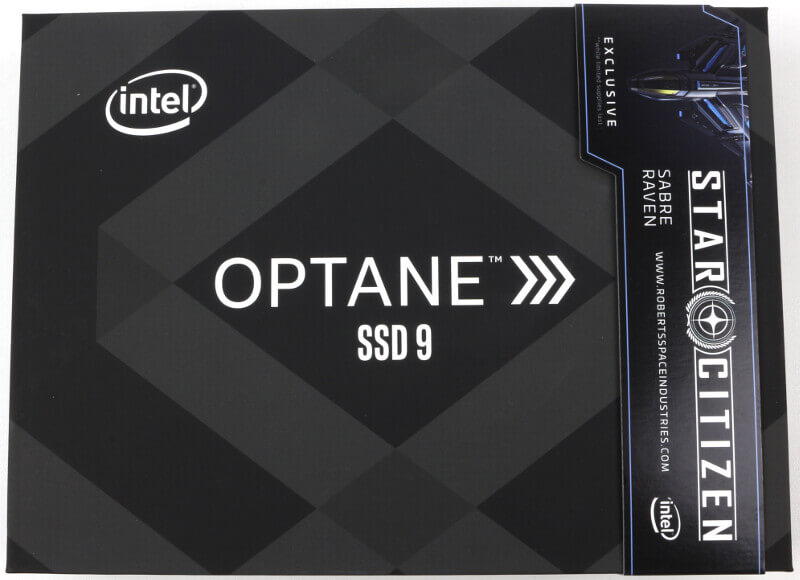
It is clear that we deal with an Intel product from the box. The top features the Optane logo and the SSD series. The box itself is wrapped with a label telling about the free bonus content.
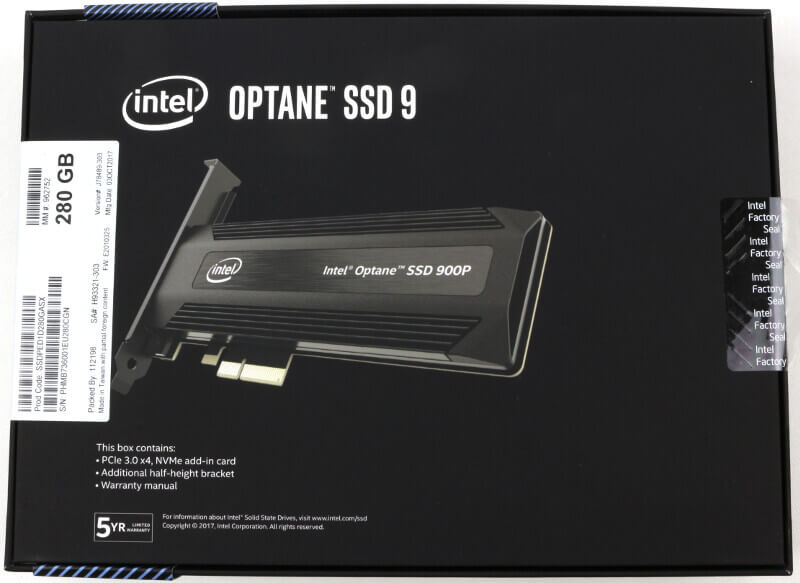
The rear showcases the included drive and it has a list of what’s included inside the box. The label at the end has the included drive’s details, such as serial and capacity.
The Accessories
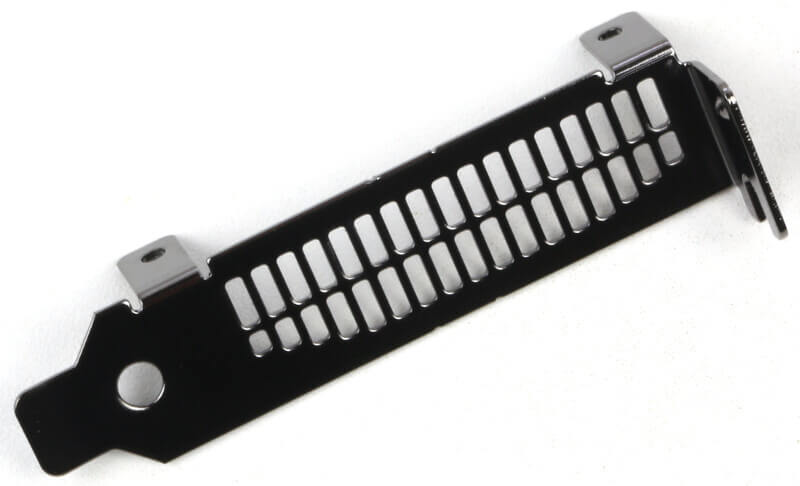
There are a few things included with the Intel Optane SSD 900p, the first being a low-profile bracket. The card is HHHL compliant and the low profile bracket allows the installation in compact systems.
The Star Citizen activation code is on a leaflet for itself. The backside has the code and details on how to activate it.
There’s also a small installation instructions manual included.
The Details
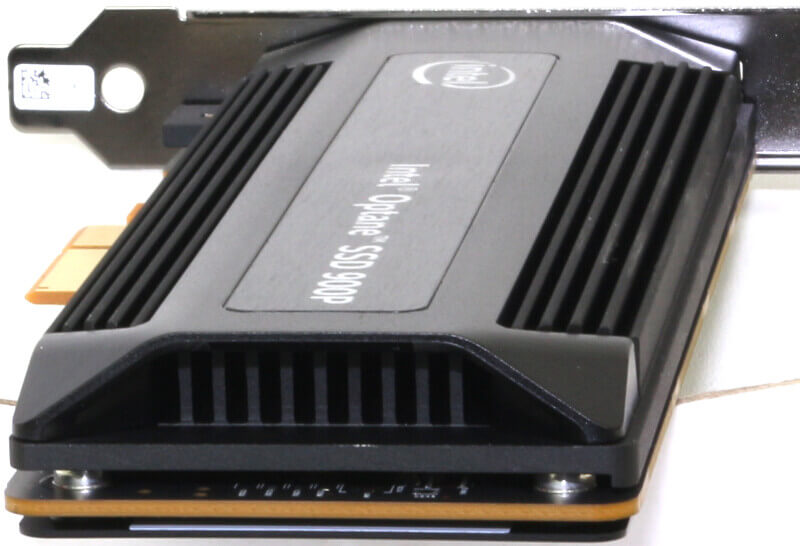
Intel’s Optane SSD 900p isn’t just an M.2 module packed onto a PCIe add-in card, it is a true PCIe SSD. The drive features a huge heatsink which will make sure that the drive won’t run into thermal throttling.
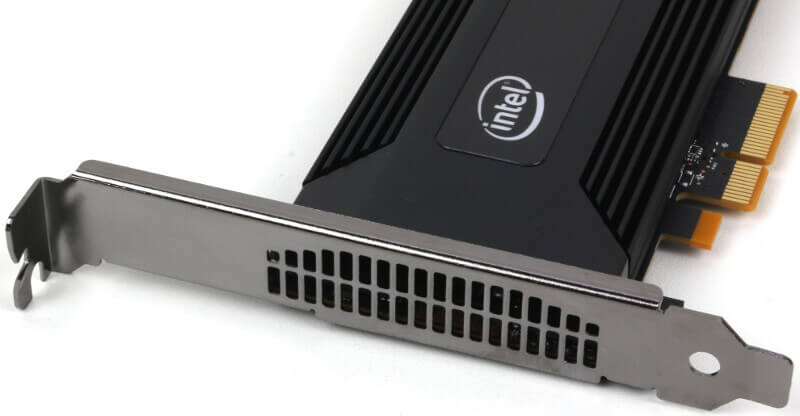
The cooling is passive all the way, but it is quite effective. When I removed the drive after days of non-stop testing, it wasn’t hot at all. It wasn’t cold as such either, but definitely below body temperature.
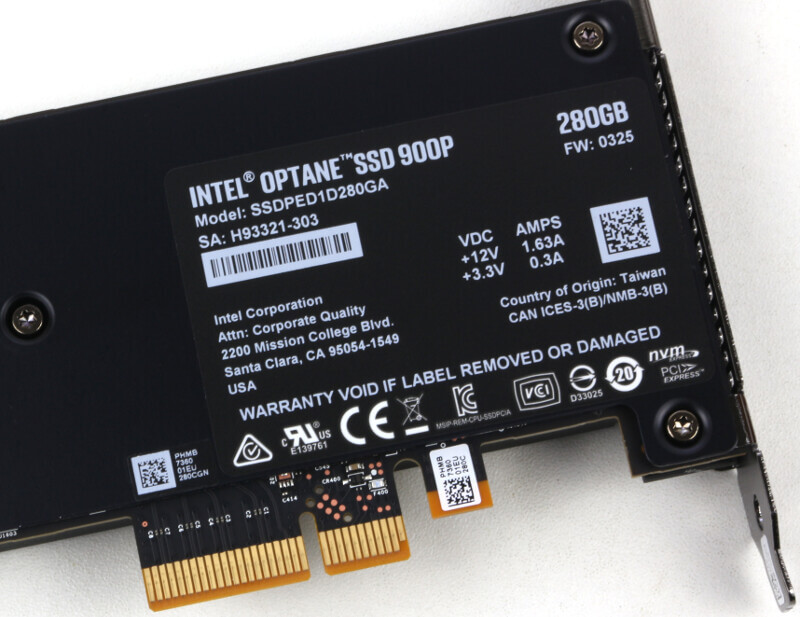
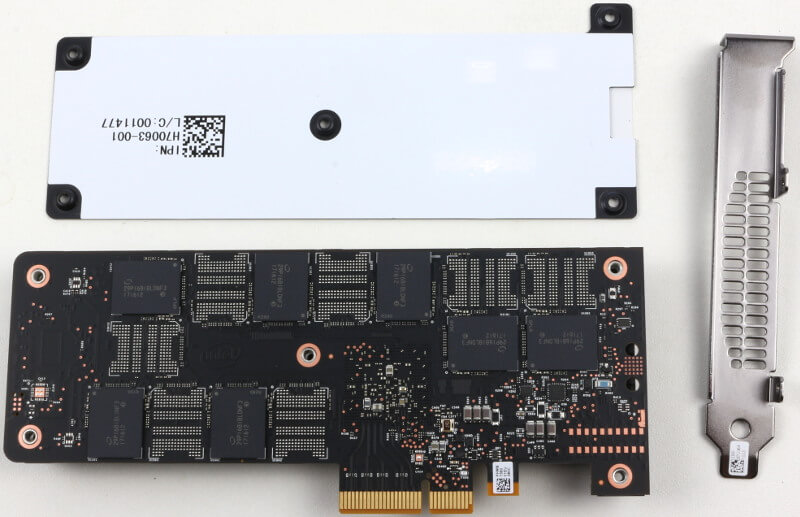
The rear side is covered with a backplate, adding cooling for the chips located on that side of the PCB. The 900p uses most of the PCB real-estate on both sides.
As with any drive I get, I try to take it apart once I’m done with the actual testing. It’s always interesting to get a peek under the hood. But just as it was with the Intel SSD 750 when I reviewed that, I couldn’t remove the heatsink. As such, it’s an easy task. Simply remove the screws. But the heat transfer pads used have such a suction that I’m afraid to damage the drive. I’d have to pull so hard to remove it, I’d risk pulling the chips of the PCB.
The backplate is easily removed which is needed to replace the full-size bracket with the included low-profile bracket. All you need is a Torx screwdriver and 30 seconds of time.
















sorry but what are the advantages in the real world if you do not report these tests:
– windows 10 start up time
– photoshop applications, premiere, etc., startup up time
– h264 video file conversion, ecc.
your test without this information is not complete …
Hi Pauls
When we test storage drives, we test them separate from the OS drive. Testing from an OS drive won’t show the full potential of a drive and might create interference in the results. As such, a boot time isn’t available. For SSDs, no matter which one, the boot time is so fast anyway that there is no reason to measure it – in my opinion. It really doesn’t matter if it takes you 4.5 or 4.7 seconds to boot windows, or does it? It’s something else for drives with caching technology such as SSHDs or when you use an Optane caching module. In those cases, boot times are important and will be compared.
App and game loading testing is available through the PCMark 8 Storage test and they are easily compared to all the previous drives we’ve tested. As the apps themselves don’t show or log their start time, there is no real way to measure it with comparable figures. Using a stopwatch, for example, would be way too inaccurate. There’s also the matter of costs of the software, the Adobe Suite isn’t exactly cheap and we do not work with pirated software.
If you got any applicable test ideas for the video conversion test, let us know and we’ll see if that’s something worth incorporating into future reviews.
Hi there,
in my opinion it is very important to test the drive as a system drive and measure OS boot time and real world applications performance. Most of us (if not all of us) are going to use this drive as a system drive. Optane 900p is either too expensive or having not enough capacity for all other applications.
Intels last “consumer” SSD 750 has a huge performance drop in terms of OS booting time (I’m not talking about 4.5 or 4.7 seconds, it was > 20 seconds). So it would be very useful, if you could extend your test and measure at least this value.
Sorry for my bad English.
Thank you for the reply
unfortunately you have not tested a samsung 960 so I can not make a comparison,
but by reading the pc mark 8 data it seems that in the real world the differences are minimal even though it has absolute values in 4k that no other ssd has at this time.
For video conversion tests you could try it with handbrake that is free
I agree with paul. wheres the comparison to the 960 pro 512gb m.2 ssd? is it obsolete already?
Sadly Samsung isn’t working with us, so we have no 960 pro results to compare it to.