AMD ATi Radeon HD 5700 Series Preview
Andy Ruffell / 15 years ago
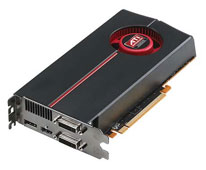
With the recent release of the first fully DirectX 11 compatible graphics card, AMD have dealt a good first blow to nVidia, with the 5870 offering performance exceeding nVidias fastest single GPU card the GTX285 and the 5850 offering impressive performance for £100 less. However if history tells us anything it is that high end cards are not where most purchasers will be putting their hard earned cash and as a result the 5700 series will be far more critical to AMDs success in this latest generation of graphics cards, than the 5800 series. If this mid-range series of graphics card sell well then AMD will do very well the graphics hardware market, it really is that crucial.
In this preview we will be looking at what to expect from AMDs Radeon HD 5700 series cards, aimed at consumers who don’t want to spend £300 on a single graphics card but still want impressive single card performance and full DX11 compatibility. I’m sure that many 4800 series users will be keeping a keen eye on the 5700 series, it could well be an inexpensive upgrade route which gains them DX11 support.
Key Features of the HD5700 Series
- It really doesn’t need saying that all the cards in this latest generation fully support the much touted DX11 which is coupled with OpenGL 3.2 support, making the 5700 series cards ready for the very latest games. It is not yet clear if the improvement over DX10.1 will be anything to get excited about and currently with the only game released to the UK market that supports DX11 being Battleforge (through a patch), it may be sometime before we find out. The history of the recent DirectX upgrades tell us that it is unlikely that the improvements will be mind blowing, but even if this is the case with the marketing machine in overdrive, it is unlikely to matter.
- Affordable PC Gaming is becoming more and more critical, especially with consoles increasing their share of the gaming market and the economic climate reducing the amount that people spend. The 5700 series is therefore being wisely marketed as cutting edge graphics card which offers impressive performance, for a very affordable price.
- Excellent connectivity including native Display Port and HDMI is part of the continued progression away from adapters towards providing native ports for the increasing popular digital connections, used on most TVs and Monitors. This coupled with AMDs Eyefinity technology gives even these affordable cards impressive connectivity. We can expect dual DVI ports along with one native HDMI port and one native Display Port. This makes connecting the card to a High Definition TV easy and also would make Tri-Monitor setups very easy and affordable assuming at least one of your monitors supports either HDMI or Display Port, which many of the premium models do.
- Lower power requirements requiring only one 6 Pin PCI-E power connector for both 5750 and 5770 is perfect for the market that these cards are aimed. Most PSUs offer at least one 6 Pin PCI-E power connector or if yours does not suitable adapters can be used, which will no doubt be provided by many graphics card manufacturers. These lower power requirements are not only great compatibility but also for the environment, which is never a bad thing. With the increasing concern for the environment AMD are clearly using these green credentials in their marketing, which I can’t blame them for. Not only has this become a hot topic over the past few years but with the economic situation people will no doubt see the reduction in their electricity bills from the very low idle power usage as a key plus point.
- Like the 5870 and 5850 the 5700 series will use a 40nm manufacturing process, some may recall the 4770 was AMDs first real trial of the 40nm technology with proved very successful and proved that 40nm was viable. The smaller fabrication process offers lower energy consumption and heat generation, along with lower production costs, part of the reason that these cards are so affordable.
- For this latest generation of cards AMD have fully adopted GDDR5, with every card in the 5800 and 5700 series adopting this memory type which just shows how mainstream GDDR5 has become. With AMD/ATi having started using this memory technology early it has become a key marketing point as nVidia are still using GDDR3 on all their previous generation of cards, including the very high end GTX285 and GTX295.
Models
In the same vein as the 5800 series, the 5700 cards will come in two flavours with a numbering system that everyone should be familiar with. The first two digits denote the series the card belongs to and the last two digits denoting the performance of the card. So the 5700 series will have the 5750 and 5780 with the latter offering the best performance out of the two. This is a helpful if predictable system that allows an easy way to see which will offer the best performance, the higher the numbers the higher the performance. AMD are clearly sticking to what they know works, so anyone familiar with the previous generation of cards should have no problem grasping where each card sits in the model line up things.
Specifications
- 5750
- Codename: Juniper LE
- Computing Power: 1.008 TeraFLOPs
- Transistor Count: 1040 Million
- Fabrication Process: 40nm
- Stream Processors: 720
- Texture Units: 36
- Core Clock: 700MHz
- Memory Clock: 1150MHz
- Memory Type: GDDR5
- Memory Size: 512MB or 1024Mb
- Memory Bus Width: 128bit
- Memory Bandwidth: 73.8 GB/s
- Memory Bandwidth: 4.6Gbps
- Idle Power Consumption: 16W
- Max Power Consumption: 86W
- Bus Interface: PCI-E 2.1 x16
- Target Price: $109USD 512MB $129 1024MB
5770
- Codename: Juniper XT
- Computing Power: 1.36 TeraFLOPs
- Transistor Count: 1040 Million
- Fabrication Process: 40nm
- Stream Processors: 800
- Texture Units: 40
- Core Clock: 850MHz
- Memory Clock: 1150MHz
- Memory Type: GDDR5
- Memory Size: 1024Mb
- Memory Bus Width: 128bit
- Memory Bandwidth: 76.8 GB/s
- Memory Data Rate: 4.8Gbps
- Idle Power Consumption: 18W
- Max Power Consumption: 108W
- Bus Interface: PCI-E 2.1 x16
- Target Price: $159USD
Well I’m sure you will agree that these are some impressive specifications for cards with Target prices of under $200USD and the 5770 appears to have the raw power to exceed performance of the current 4800 series, all but the x2 cards of course. As we’ve seen in the past, raw power isn’t always enough so we will have to wait for some benchmark results before drawing any conclusions, but once the drivers reach maturity I can see these cards being the budget and mid range choices for some time to come. From the pre-order prices that I’ve seen, UK retailers appear to be pricing the 5700 series very keenly, even with the poor exchange rate. Pre-Order prices are £115 to £120 for a 1GB 5750 and £130 to £145 for a 1GB 5770. With the minimal price difference of around £15 between the cheapest 5750 and 5770 it would be wise to go for the 5770, as it is unlikely that dormant stream processors and texture units on the 5750 could be unlocked and for such a small extra amount of cash not really worth the hassle of trying.
Conclusion
Although it is not clear yet if DX11 is anything more than marketing hype, it is clear that these two new graphics cards have the potential to become very popular upgrades for the mid-range user. They offer an impressive amount of hardware and performance for very little money, although this may not be enough for some 4800 series owners to take the plunge. Many users will however see these cards as an affordable route to DX11, which regardless of the near complete lack of compatible games currently released will still be very attractive. So assuming they are priced as keenly as the pre-order target prices suggest and the drivers mature quickly enough nVidia could well have some serious problems breaking into the mid range market that these cards are aimed at. We should see their response to the 5870 and 5850 in December 2009 and a response to the 5700 series in Q1/Q2 2010, but for now it appears that AMD have a good footing in the market. If the benchmarks are as impressive as the hardware and pricing, AMD appear to be onto a winning formula with the 5700 series.