Sapphire RX 7700 XT Pure 12GB Graphics Card Review
Brandon Dodman / 8 months ago
A Closer Look
This is the card I couldn’t wait to talk about. The Sapphire 7700 XT Pure. It’s new, it’s shiny and it’s white and it just looks extremely clean. While it’s on the larger size, it’s no bigger than the Gigabyte and XFX cards, coming in at 320mm long, 115mm tall and 50mm thick as well as only weighing 1290 grams which is pretty light for a GPU these days.
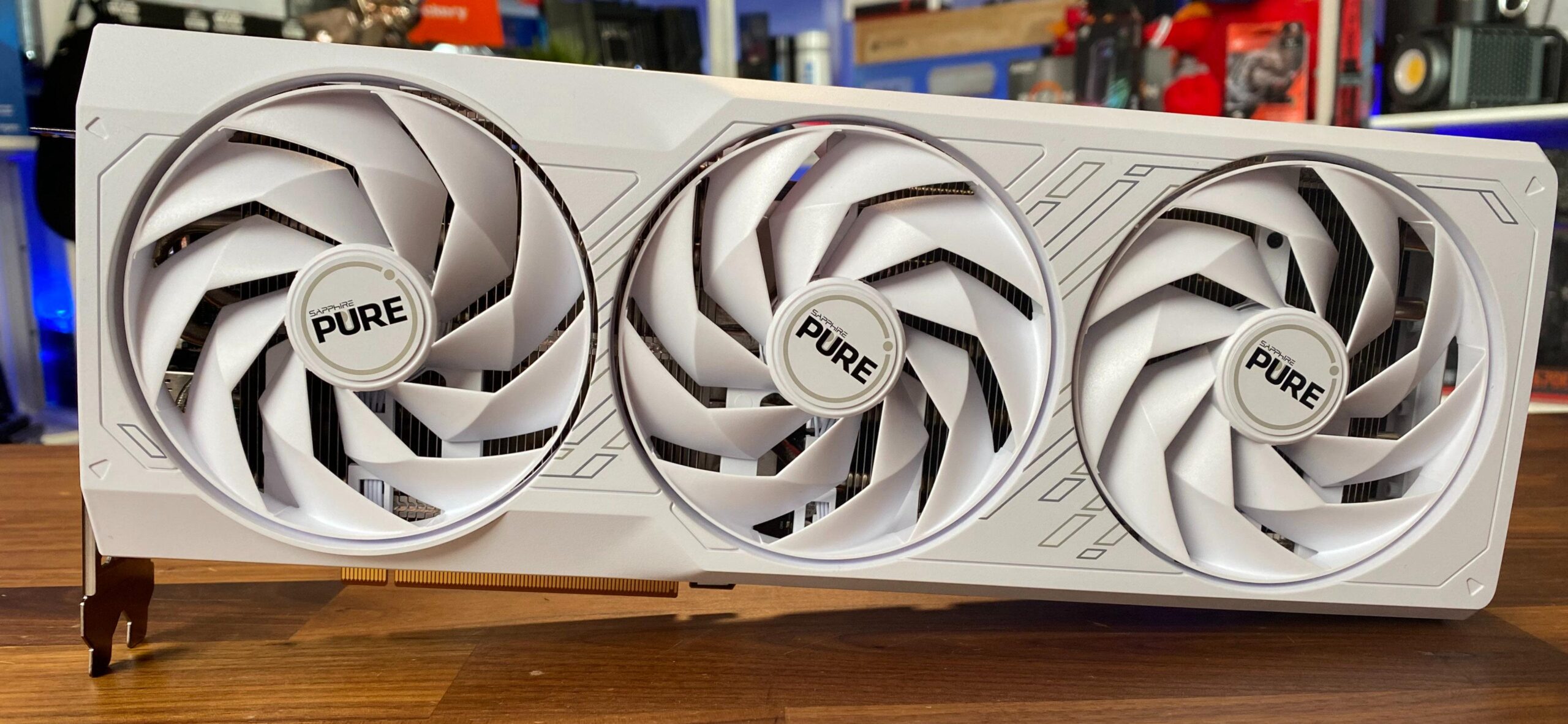
In terms of the style, it’s frankly gorgeous and the name is very fitting. Pure, with its pure white design, striking edges, and as always with Sapphire, superior build quality even down to the 3 large velocity hybrid fans with funky-edged blades.
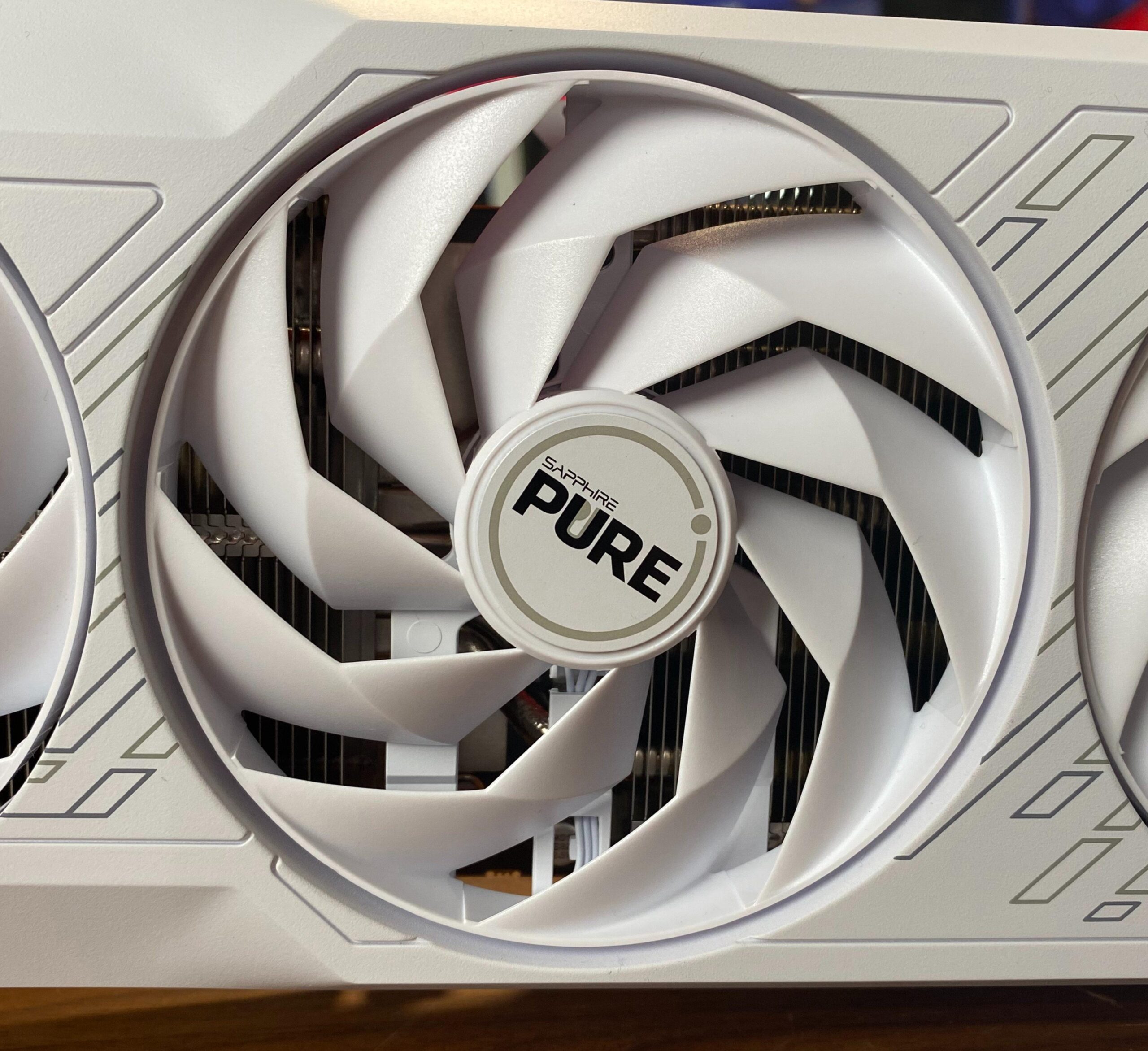
There are some accents throughout the card, but other than that, things are kept simple, even as the front shroud wraps around the top of the card and meets with the backplate, though I do have one gripe, which comes down to the big block of red plastic on the top. For me, it just stands out like a sore thumb and also adds a red LED to the middle part of the card, but thankfully an LED switch allows you to turn that off easily enough.

The backplate is clean, white and visually stunning too, with simple branding, grey markings and a small angled set of cutouts on the end to help heat escape from.

The I/O will take up two slots in your case, though the card is slightly thicker than that, and connectivity-wise, you get 2 HDMI ports and 2 DisplayPort connectors.

Taking the card apart is relatively simple and the PCB is pretty standard in comparison to what we’ve seen on other 7700 XT models.

There are two 8-pin power connectors on the top right of the PCB and that LED switch is positioned just on the side.

In terms of power delivery, the card features 14 phases as part of the setup, which again is very similar to what we’ve seen on other models split with 8 for the GPU, 2 for the memory, 2 for the SOC and 2 for other various components, which is the same setup as Sapphires 7800 XT Nitro+ too.

The heatsink spans longer than the PCB and sits nicely between the backplate and the fans with the PCB sandwiched beneath with a cold plate that makes contact with the GPU core and memory, while separate plates assist cooling to the VRM’s.

The heatsink is split into two sections separated by heatpipes which take heat away to either end of the large blocks away from the main part of the card.